Facelifts at Illume Cosmetic Surgery
Facelifts in Milwaukee & Waukesha
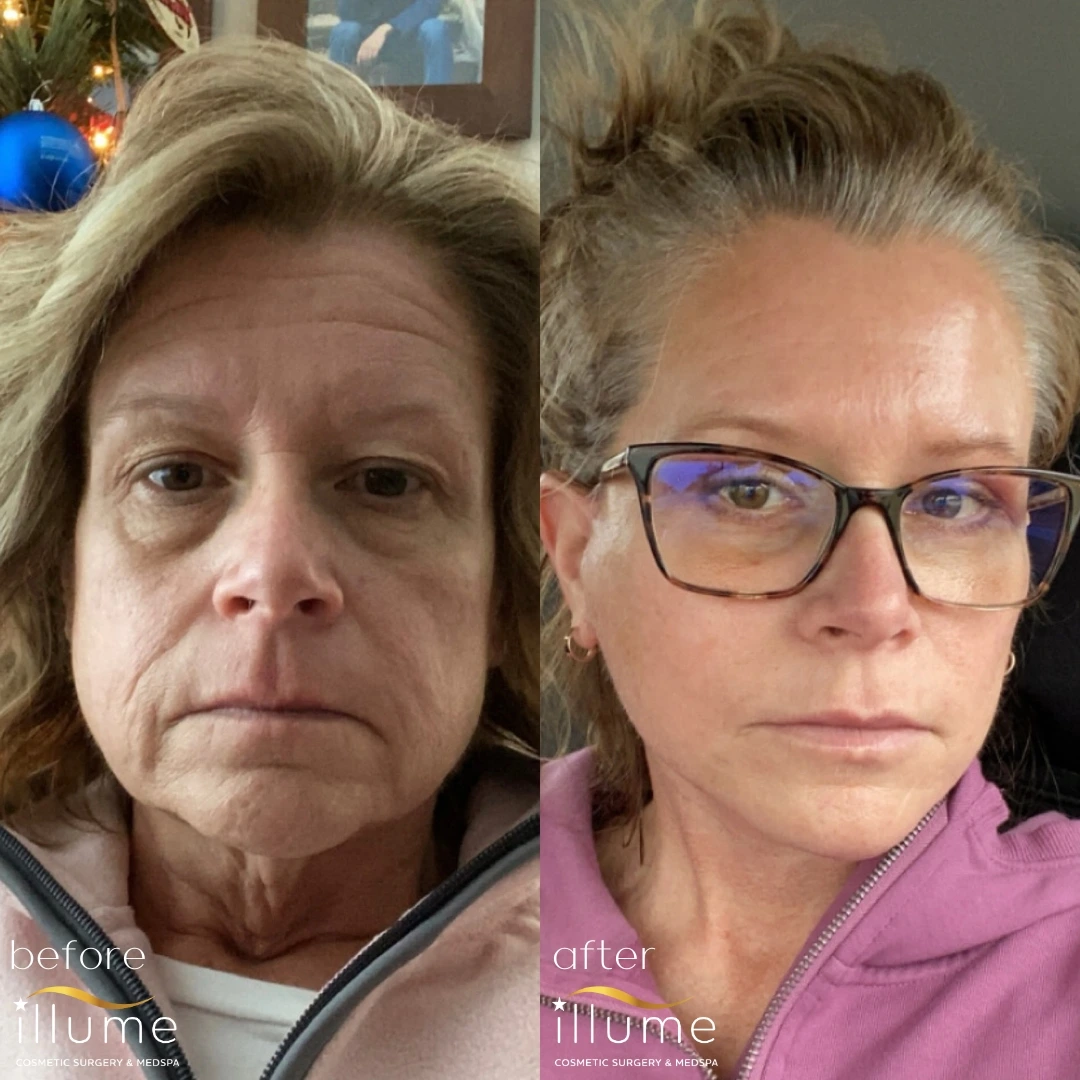
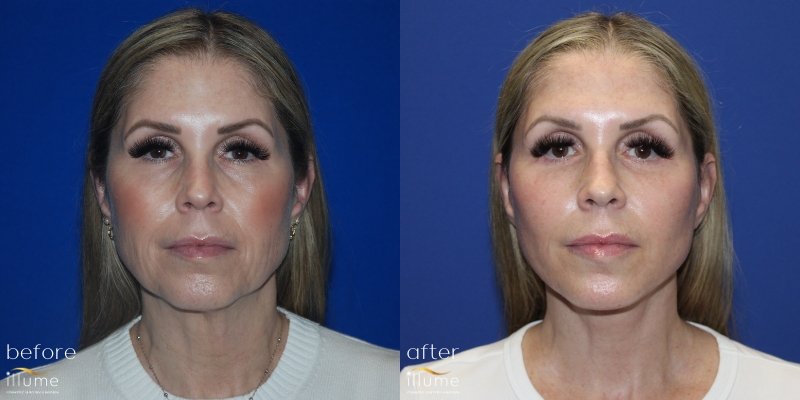
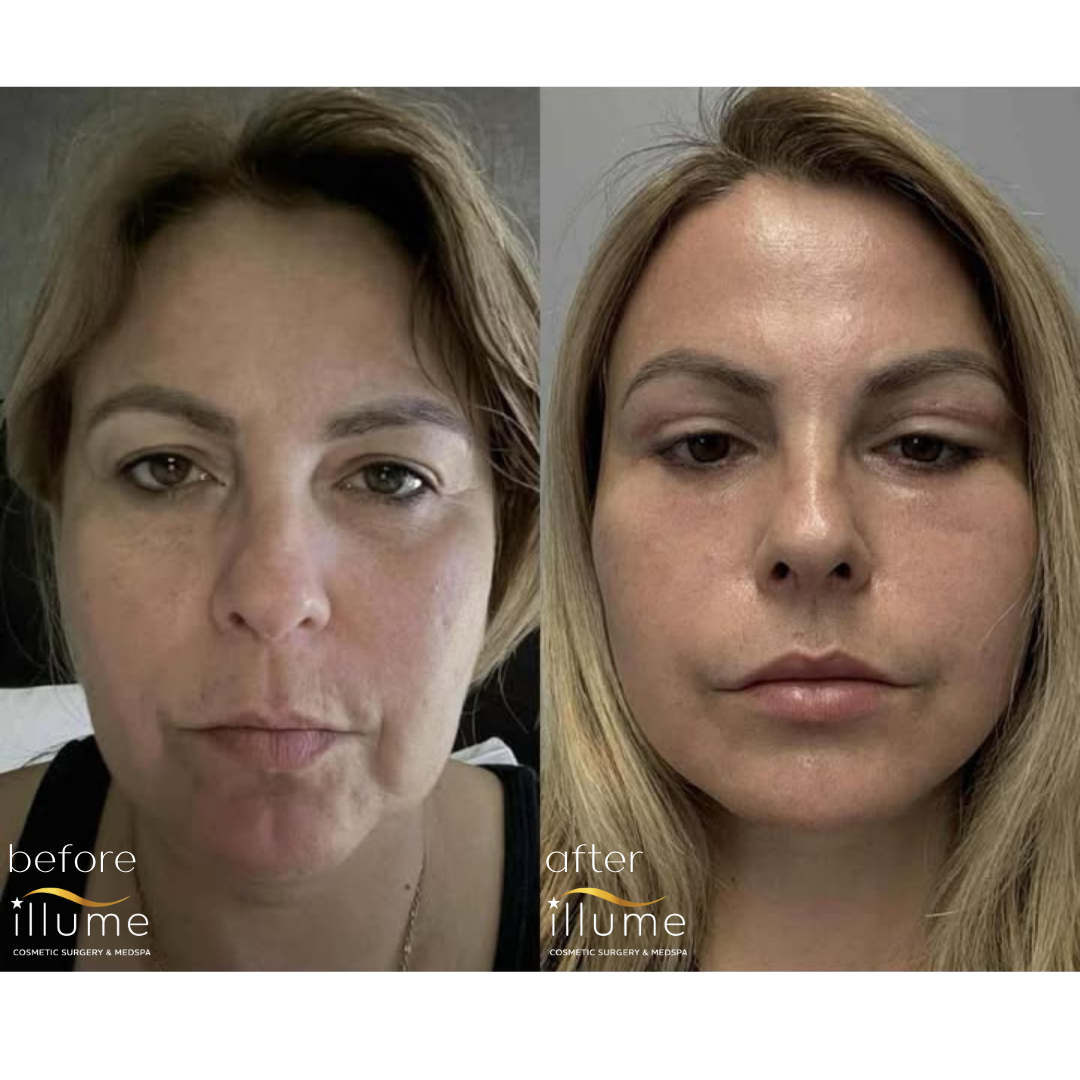
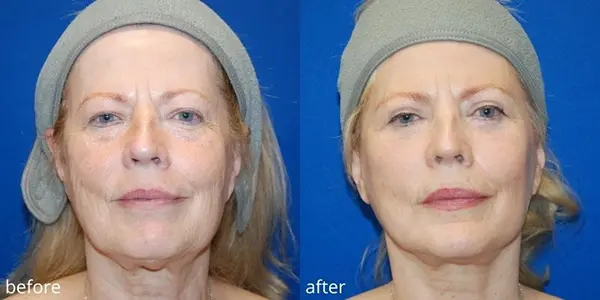
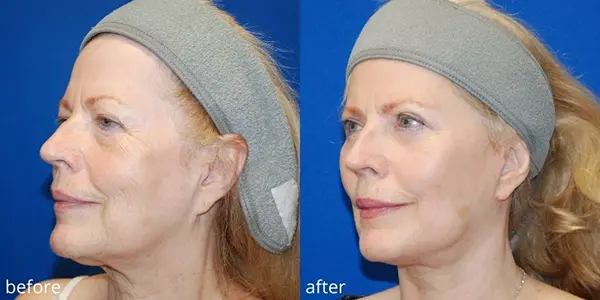
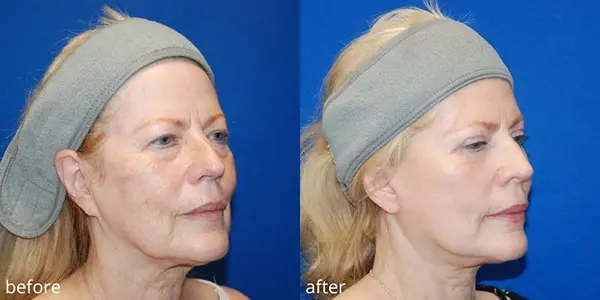
When performed properly, a facelift can create a refreshed, more youthful appearance by addressing visible signs of aging in the face, jawline, and neck. Our board-certified plastic surgeons at Illume in Milwaukee, Waukesha, Menomonee Falls, Franklin, and Mukwonago use a comprehensive approach to facial surgery that considers not only the skin, but also the underlying muscles, fat, and fascia for natural-looking, long-term results.
Mini Facelift Options at Illume
For some patients, a mini facelift may be an option to address earlier signs of aging with a more focused surgical plan. During your consultation, your surgeon can review your goals, discuss facelift or mini facelift before and after expectations, and explain what to expect with mini facelift recovery time based on your individual treatment plan.
What Is A Facelift?
Also known as rhytidectomy, a facelift is a surgical procedure that can smooth loose skin on the face and neck, tighten underlying tissues, and remove excess skin and fat. Some of the most visible signs of aging appear in the lower face, jawline, and neck. A facelift can help create a firmer, more refreshed appearance when these changes no longer match the way you feel.
Our board-certified plastic surgeons at Illume use a comprehensive approach to traditional and deep plane facelift surgery. This means your procedure is planned to address not only the skin, but also the underlying muscles, fat, and fascia to support natural-looking, long-term results.
Below is basic information about facelift procedures. However, the best way to get answers specific to your goals is through a personal consultation with one of our board-certified plastic surgeons. Facelifts at our Milwaukee, Waukesha, Mukwonago, Menomonee Falls, and Franklin practice use advanced techniques designed to create a smoother, more rejuvenated appearance while keeping your results balanced with your natural features.
Micro/Nano Fat Grafting
Micro/nano fat grafting is a fat transfer technique that may be used with facial rejuvenation procedures to restore subtle volume in delicate areas. The fat is carefully harvested and injected with smaller, more precise syringes. This technique is often used around the under-eyes or face, while standard fat grafting may be used in larger areas of the body.
What’s The Best Age For A Facelift?
Facelifts are most commonly performed on patients in the 40-60 age range. However, the procedure can produce good results for people in their 70s and 80s as well. You may be a good candidate for a facelift if you have any of the following types of conditions:
- a deep line that runs from the corner of your nose to the corner of your mouth
- loss of a well-defined jaw-line (appearance of jowls)
- deep wrinkles in the cheeks and sagging skin near the cheekbones
- loose facial skin, wrinkles or excess fatty tissue in the neck (appearance of turkey neck
What to expect at a consultation
A personal consultation is the first step for every patient considering a facelift. During this meeting, one of our board-certified plastic surgeons will assess your physical and emotional health and discuss your specific goals for surgery.
During your physical evaluation, the doctor will assess your bone structure and the underlying tissues of the face. The thickness, texture and elasticity of your skin and the severity of the wrinkles and folds will also be considered.
Suggestions may be given for other cosmetic procedures that can be performed along with a facelift to meet your appearance goals. For example, a facelift is frequently combined with:
- A forehead lift, to correct lines or furrows in the forehead
- Eyelid surgery, to eliminate drooping upper eyelids or bags beneath the eyes
- Skin treatments, such as laser resurfacing, to minimize fine wrinkles.
- Your own fat transfer to increase hollow cheeks
Facelift Surgery
Your facelift procedure will be performed in one of our accredited, in-office surgical suites. Most often we use local anesthesia and intravenous sedation (twilight sleep) for facelift procedures. However, for some patients, general anesthesia with one of our board-certified anesthesiologists may be the best choice. The type of anesthetic and location of surgery will be discussed during the consultation.
How Long does a Facelift Surgery Last?
The surgery can take from 2-4 hours. After surgery, you will spend at least 2-3 hours in the recovery area and will then be discharged. We offer private- duty nursing care if desired. Details regarding this may also be discussed during your consultation.
Facelift Recovery Time
In the recovery area, a bulky head dressing will be wrapped around your head and neck to help control swelling. Small drainage tubes are placed beneath the skin on both sides of the neck to drain away fluids that might otherwise accumulate. Discomfort is usually minimal, however, pain medication prescribed by your surgeon will help to relieve the discomfort.
In the early stages of healing, you should rest with your head elevated to help minimize bruising and swelling. We will see you in the office the day after surgery to remove the head dressing and the drains. An elasticized garment is used in place of the bulky head dressing to help control the swelling. Most patients find this to be comfortable while offering support to the surgical area. You may shower and shampoo after the drains are removed. Sutures will be removed in stages, the first set in 5 days and the remaining sutures in 8-10 days. Most of the swelling and bruising will disappear within two weeks. Specific instructions for care after the surgery will be provided.
If you’re like most people who have the procedure, you’ll be very pleased with your refreshed and rejuvenated appearance. Although the the recovery process may take some time, you can expect the end result to be worth the wait.
A number of factors, including your heredity and your lifestyle, play a role in how long the results of your facelift will last. Even though the aging process continues, patients are very happy with their appearance for many years following a facelift. By taking care of your skin, embracing a healthy lifestyle, and minimizing sun exposure, you can optimize and safeguard the outcomes of your facelift. Some patients find that they want to make additional improvements at a later time. In some cases, patients may choose to explore further enhancements in the future.
Preparing For Your Facelift Surgery
When the date for your procedure has been set, we will provide you with specific instructions for the days immediately before and after surgery. A number of points may be covered, including:
- Avoiding certain medications that may complicate surgery or recovery, such as Aspirin, aspirin type products,
- Vitamin E and Gingko
- Stopping smoking for a period of 6 weeks before and after surgery
- Arranging for help and special care following surgery
- Letting your hair grow long enough so that it will cover your incisions while they heal
Non-Surgical Facial Rejuvenation Treatments
If you prefer not to undergo surgical facelift procedures, there are non-surgical options available to help improve the appearance of your skin and reduce signs of aging. Here are some non-surgical facelift options at Illume Offers:
What is a deep plane facelift?
A Deep Plane Facelift is an advanced surgical procedure that lifts the deeper layers of tissue, including the muscles and fat beneath the skin. This technique provides more dramatic and longer-lasting results by addressing the underlying structures that contribute to facial aging, offering a smoother, more youthful appearance.
Deep Plane Facelifts Recovery Timeline
You will wear a head dressing to reduce swelling, and small drainage tubes may be used. Discomfort is minimal, with pain medication provided. Keep your head elevated during the initial recovery period to reduce swelling and bruising. After the first day, the dressing and drains will be removed and replaced with a lighter garment. Sutures are removed in stages: the first set in 5 days, the remainder in 8-10 days. Most swelling and bruising should subside within two weeks.
Longevity of Deep Plane Facelifts Results
Deep Plane Facelifts offer longer-lasting results as they address deeper facial layers. While aging continues, most patients enjoy a refreshed look for many years. To maintain results, follow a healthy lifestyle, protect your skin, and avoid excessive sun exposure. Some may opt for additional treatments over time to maintain their appearance.
What is the difference between a Deep Plane Facelift vs. Traditional Facelift
The main difference between a Deep Plane Facelift and a traditional facelift lies in the depth of the surgery. While a traditional facelift primarily tightens the skin, a Deep Plane Facelift targets deeper layers, such as the muscles and fat, for more comprehensive rejuvenation.
What is the difference between a Micro/Nano Fat Graft and a Standard Fat Graph
The main difference between a Micro/Nano Fat Graft from a Standard Fat Graft is that the harvesting for a Micro Fat Graft does not break down as much of the fat as a standard fat graft. A Micro Fat Graft is also injected using smaller, more precise syringes, making it very useful for delicate areas of the bod, such as the under-eyes or face.
Request More Info
"*" indicates required fields
"*" indicates required fields
Ready to Book Your Consultation?
Payment Plans & Patient Financing Options
We are CareCredit certified and offer 6 months of interest free financing on all services we offer, including surgical procedures, medspa treatments, and weight loss with CareCredit. We also offer several other patient financing options and accept all major credit cards.
Before and After
Facelift Gallery
Facelifts performed at our Milwaukee and Waukesha locations are done by a board-certified surgeon and have been proven to show great results. Contact us today to learn more about your options regarding our facelift Milwaukee and Waukesha services. Illume can help you feel like the younger version of yourself again.