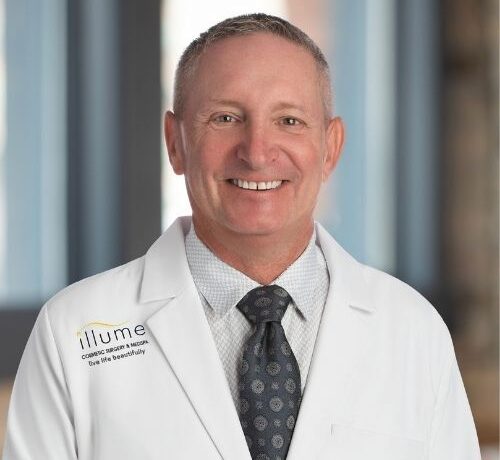
Written by: Illume Plastic Surgery Editorial Team
Clinical Content Oversight: Illume Cosmetic Surgery
Choosing to have plastic surgery is a personal decision. Choosing who performs your surgery is just as important.
If you are searching for a plastic surgeon in Milwaukee, you will likely find plenty of options. Credentials, experience, surgical facilities, before-and-after photos, communication style, and follow-up care can all help you narrow down your choice. The goal is not simply to find someone who offers the procedure you want. You want a surgeon who understands your goals, explains your options clearly, and helps you develop realistic expectations for surgery and recovery.
Your consultation is one of the best opportunities to decide whether a surgeon and practice feel right for you. Before scheduling surgery, consider asking these eight questions.
1. Are You Board Certified in Plastic Surgery?
This is one of the first questions to ask any plastic surgeon you are considering.
Not every physician performing cosmetic procedures has completed the same type of specialized plastic surgery training. When a surgeon describes themselves as board certified, ask which medical board provided that certification.
Certification by the American Board of Plastic Surgery, or ABPS, indicates that a surgeon has completed extensive training in plastic surgery and successfully completed comprehensive written and oral examinations.
You can also review a surgeon’s education, residency training, fellowships, professional affiliations, and years in practice. Credentials do not tell you everything about whether a surgeon is the right fit, but they give you important information about the training behind their recommendations.
At Illume, surgeon profiles clearly outline credentials, education, training, certification status, and areas of expertise so patients can learn more before scheduling a consultation.
2. How Often Do You Perform the Procedure I Am Considering?
Plastic surgery covers a wide range of procedures. A surgeon may have extensive experience in breast surgery, facial procedures, body contouring, reconstructive surgery, or several different areas.
That is why it is worth asking about experience with your specific procedure.
If you are considering a tummy tuck, for example, ask how regularly the surgeon performs abdominoplasty and whether they frequently work with patients who have concerns similar to yours. The same applies to procedures such as breast augmentation, breast reduction, facelift surgery, rhinoplasty, liposuction, or a mommy makeover.
You can also ask whether another procedure might be more appropriate for your goals. Sometimes the treatment a patient initially has in mind is not the option a surgeon ultimately recommends after evaluating their anatomy.
A good consultation should feel like a conversation about what makes sense for your body, not a sales pitch for a particular surgery.
3. Can I See Before-and-After Photos of Patients With Similar Goals?
Before-and-after photos can tell you a lot about a surgeon’s work.
Rather than looking only at dramatic transformations, pay attention to patients whose starting point is somewhat similar to yours. Look at proportions, scars, symmetry, contour, and how natural the final result appears.
For facial surgery, consider whether results still look like the individual patient rather than creating the same appearance for everyone. For breast and body procedures, look for results involving similar body types, concerns, and surgical goals.
Keep in mind that another patient’s result cannot predict exactly what yours will look like. Your anatomy, skin quality, healing, health history, and procedure plan can all affect the outcome.
Before-and-after galleries are best used as a way to understand a surgeon’s approach and discuss what may realistically be possible for you.
4. Where Will My Surgery Be Performed?
The surgeon is only one part of your surgical experience. You should also know where your procedure will take place.
Ask whether surgery is performed in a hospital, outpatient surgical center, or in-office operating facility. If the practice has its own surgical center, ask about its accreditation and the safety standards it follows.
You can also ask what happens on surgery day, where you will recover immediately after your procedure, and who will be monitoring you before you are discharged.
Illume performs surgical procedures at its in-house surgical centers in Milwaukee and Waukesha. The centers are nationally accredited and Medicare-certified, allowing patients to receive surgical care in a setting designed specifically for privacy, comfort, and coordinated cosmetic and reconstructive care.
Knowing where your surgery will happen ahead of time can make the entire process feel much less unfamiliar.
5. Who Will Be Providing My Anesthesia?
If your procedure requires general anesthesia, ask who will administer and monitor it.
You should understand what type of anesthesia is planned and which medical professional will be responsible for your care while you are under anesthesia. Your health history, medications, previous experiences with anesthesia, and the procedure being performed may all be part of this discussion.
At Illume, general-anesthesia cases are performed with board-certified anesthesiologists from ANEX Anesthesia.
Do not hesitate to bring up concerns about nausea, previous anesthesia reactions, medications, or medical conditions during your consultation and preoperative appointments. Providing your care team with a complete health history is an important part of planning for surgery.
6. What Results Can I Realistically Expect?
It is easy to walk into a plastic surgery consultation focused entirely on what you want to change. An experienced surgeon should also help you understand what surgery can and cannot accomplish.
Ask what type of improvement is realistic based on your anatomy. You should also talk about scars, asymmetry, swelling, how long results may take to develop, and whether your results could change with aging, pregnancy, weight fluctuations, or other factors.
This is also the time to discuss risks and possible complications.
Every surgical procedure carries some degree of risk. The specific risks depend on the surgery, your health, and other individual factors. Your surgeon should explain these clearly and give you an opportunity to ask questions before you make a decision.
Be cautious about anyone who guarantees a specific cosmetic result. Plastic surgery can create meaningful changes, but no two patients heal exactly the same way.
7. What Will Recovery and Follow-Up Care Look Like?
The procedure itself may take a few hours. Recovery can last for weeks or months depending on the surgery.
Before choosing a surgeon, make sure you understand what happens after you leave the surgical center.
Ask when your first follow-up appointment will take place, how often your surgeon expects to see you, and who you should contact if you have a concern during recovery. It is also helpful to ask about activity restrictions, time away from work, exercise, lifting, driving, compression garments, incision care, and when you can expect swelling and bruising to improve.
For larger procedures, planning your home recovery before surgery can make a significant difference. You may need help with children, pets, meals, transportation, or household responsibilities during the first part of healing.
This is one advantage of choosing a plastic surgeon in the Milwaukee area when you live locally. Follow-up appointments and unexpected questions are easier to manage when your surgical team is nearby.
At Illume, postoperative care includes follow-up visits so your surgical team can monitor healing, answer questions, and guide you through each stage of recovery.
8. What Is Included in the Cost of Surgery?
Price matters, but comparing plastic surgery based only on the lowest number can leave out important details.
Ask for a personalized quote and find out exactly what it includes. Depending on the procedure and practice, surgical pricing may involve the surgeon’s fee, operating facility, anesthesia, implants or surgical materials, garments, medications, and follow-up care.
You should also ask questions about payment policies, available financing, and any expenses that may not be included in the initial quote.
Most importantly, cost should be considered alongside training, experience, safety, surgical facilities, communication, and the quality of care you receive before and after surgery.
Plastic surgery is highly individualized, so an accurate price usually requires an in-person evaluation and personalized surgical plan.
Pay Attention to How You Feel During the Consultation
Qualifications and experience are essential, but there is another part of choosing a plastic surgeon that is harder to measure.
- Do you feel comfortable asking questions?
- Does the surgeon listen to what you actually want?
- Do they explain why they recommend one option over another?
- Are they willing to tell you when a procedure is not appropriate for you?
- Do you feel informed rather than pressured?
You should leave your consultation with a clearer understanding of your options, not more confusion. It is completely reasonable to take time after your appointment to think about the recommendation before scheduling surgery.
Plastic surgery is elective in many cases. You should feel comfortable with both your treatment plan and the team caring for you.
Choosing a Plastic Surgeon in Milwaukee
Finding the right Milwaukee plastic surgeon involves more than searching for a procedure and choosing the first practice that appears.
Look closely at training and credentials. Ask about experience with the specific procedure you are considering. Review before-and-after photos. Learn where your surgery will take place and who will provide anesthesia. Make sure you understand the risks, expected results, recovery process, follow-up care, and complete cost.
Most importantly, choose a surgeon who takes the time to understand what you are hoping to achieve and gives you the information you need to make your own decision.
At Illume Cosmetic Surgery & MedSpa, patients have access to an experienced team of plastic surgeons with a wide range of cosmetic and reconstructive expertise. Surgical procedures are performed at Illume’s nationally accredited, in-house surgical centers in Milwaukee and Waukesha, with board-certified anesthesiologists providing anesthesia for general-anesthesia cases.
If you are considering breast, body, or facial plastic surgery in Milwaukee, the next step is a personal consultation. Your surgeon can evaluate your concerns, discuss your goals, review the options available to you, and create a treatment plan based on your anatomy and lifestyle.
Schedule your consultation with Illume Cosmetic Surgery & MedSpa to get started.
This article was developed for educational purposes with clinical content oversight from Illume Cosmetic Surgery. Individual recommendations, surgical plans, risks, and recovery timelines vary by patient and procedure. A personal consultation with a qualified plastic surgeon is necessary to determine which options may be appropriate for you.
Last reviewed: September 2026
Frequently Asked Questions
How do I choose a good plastic surgeon in Milwaukee?
Start by reviewing the surgeon’s board certification or certification status, education, training, experience with your specific procedure, before-and-after results, and surgical facility. A consultation also gives you the opportunity to evaluate how well the surgeon communicates, whether your goals are being heard, and whether you feel comfortable with the recommended treatment plan.
Why does board certification matter when choosing a plastic surgeon?
Board certification can help you understand a surgeon’s training and qualifications. Certification by the American Board of Plastic Surgery requires specialized plastic surgery training as well as written and oral examinations. Patients should always ask which board has certified a surgeon rather than assuming all certifications represent the same training.
Should I meet with more than one plastic surgeon before surgery?
You can. Some patients feel comfortable after their first consultation, while others prefer to meet with more than one surgeon before making a decision. The important thing is that you understand your options, have realistic expectations, and feel confident asking your surgeon questions before scheduling your procedure.
What should I bring to a plastic surgery consultation?
Be prepared to discuss your medical history, previous surgeries, medications, allergies, lifestyle, and goals. You may also want to bring a written list of questions. Reference photos can sometimes help explain what you like, but they should be viewed as a communication tool rather than a guarantee that another person’s exact result can be recreated.
Where does Illume perform plastic surgery?
Illume performs surgical procedures at its in-house surgical centers in Milwaukee and Waukesha, Wisconsin. The centers are nationally accredited and Medicare-certified. For procedures requiring general anesthesia, Illume works with board-certified anesthesiologists from ANEX Anesthesia.